
By Tony and Mercy
For many years, conversations about mental health in our community were either had in whispers or avoided altogether. Struggles with stress, depression, or anxiety were seen as personal weaknesses rather than real challenges. But today, a silent revolution is happening.
Through mental health safe spaces we are running in our community in the informal settlement of Kahawa Soweto, people are beginning to find their voices, reclaiming their confidence, and walking the journey of healing together.
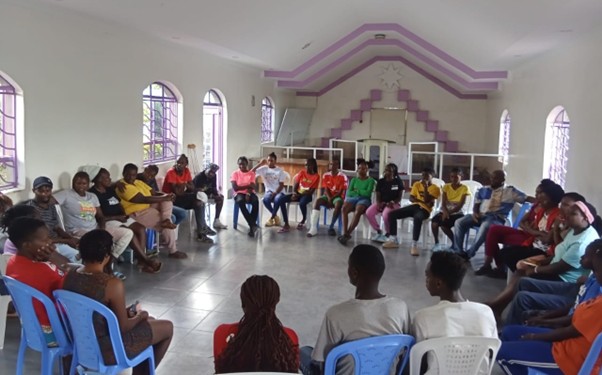
What began as something like a dream has now grown into a trend of openness and support. Every week, people from different walks of life gather, not just to talk, but to listen, to learn, and to remind each other that nobody is ever truly alone.
One young gen Z who had battled silent depression for months shared that, before attending, he felt completely isolated. “I thought no one would understand me,” he said. “But in the safe space, I realized others had gone through what I was going through. It gave me hope,” he noted.
Another participant, a mother of three, revealed that she had carried the burden of stress and shame in silence. After attending psychosocial support sessions, she learnt coping strategies, including self-care and seeking help when overwhelmed. “For the first time, I felt heard,” she explained. “I no longer feel like I have to fight my battles alone,” she added.
Perhaps one of the most striking success stories is that of a man who walked into our very first safe space session for young people struggling heavily with alcohol use. At that time, his appearance reflected the toll of drinking and neglect. Just a few sessions later, there was a noticeable change. He had cleaned up, reduced his drinking habits, and started to regain a sense of dignity and self-control. With the support of the group, he continues to make progress. As he shared in one session, “this space made me realize I can be better. Every time I sit here, I want to try again,” he revealed.
These stories are not isolated. They are the heartbeat of what the safe spaces stand for “breaking stigma, building resilience, and empowering people to face life with courage.”
The safe spaces have done more than just touch individual lives; they are also reshaping the community.

Participants report:
- Reduced stigma: Mental health is no longer a taboo subject.
- Peer support: Friendships and support networks have been built that extend far beyond the sessions.
- Practical skills: Members are learning real coping strategies for stress, trauma, and daily challenges.
- Leadership: Some participants are stepping forward as advocates, spreading awareness in schools, churches, and community meetings.
What makes the safe spaces powerful is not only the stories of healing but the ripple effect. Families are beginning to talk openly about mental health. Friends are checking in on each other more. Local leaders are starting to recognize the importance of mental wellness alongside physical health.
One participant summarized it best: “In this safe space, I discovered that I’m not broken, I’m human. And humans heal better when they heal together.”
Our success story is not about statistics, but about transformation. It’s about people finding light where there was once darkness, strength where there was once silence and community where there was once isolation. The safe space model shows us that when people are given a chance to share without fear of judgment, healing is possible, hope is restored, and lives are changed.
About the writers
Mercy and Toney are among 90 youth from informal settlements in Mukuru, Mathare and Kahawa Soweto trained by Basic Needs Basic Rights Kenya, Shack Dwellers International Kenya (SDI Kenya) and Tabasamu Cafe on mental health and climate change, and are now working to build community resilience in their respective localities.