
By Jane Wambui
In Mathare, where the scars of floods, fires, and demolitions remain fresh, mental health is rarely spoken about openly. Yet, it is often the silent wound carried by many residents. An unseen crisis layered on top of poverty and displacement.
In the midst of this reality, a group by the name Swift Slum Integrators Mathare (SSIM) Group is rewriting the story of resilience by showing how healing the mind can also heal a community.
From trauma to purpose
The group traces its beginnings back to 2017, when its founder, Calvins, a young leader with a passion for community change, began mobilizing youth in Mathare. But the turning point came in April 2024, when heavy floods and subsequent demolitions destroyed homes, livelihoods, and peace of mind. Calvin himself developed Post-Traumatic Stress Disorder (PTSD) something he did not recognize until he joined the Race to Resilience training, organized by Basic Needs Basic Rights Kenya, SDI Kenya and Tabasamu Cafe.
The training helped him realize that his sleepless nights, flashbacks, and anxiety were not isolated experiences, but signs of trauma shared by many in his community. That realization became the seed for SSIM. “I saw that climate change was not only destroying homes but also it was damaging minds,” Calvins explains. “If we do not address mental health, then we cannot truly recover,” he continues.
Creating safe spaces through action
Every activity SSIM runs is rooted in the belief that mental health improves when people come together, share their struggles, and rebuild with purpose. The group therefore engages in a number of activities to achieve this including:
Urban farming as therapy: After the demolitions of structures in the flood prone areas of the Mathare informal settlement, the group started farming along the riparian land. What began as a way to grow food soon turned into a safe haven for unemployed youth who had lost everything. Working the soil, tending to the plants, and sharing stories offered members a chance to cope. As Calvins often says, “a problem shared is a problem half solved.”
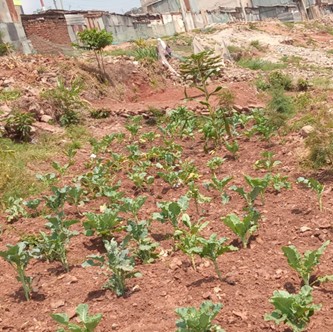

A section of the riparian land in Mathare informal settlement that has been turned into farmland by SSIM. Photo by Jane
Waste buy-back and upcycling: Through their buy-back center, the group collects glass bottles and upcycles them into kitchen appliances and home décor. Beyond providing income, the repetitive craftwork and sense of productivity give members especially those struggling with unemployment-related depression a sense of worth and calm.
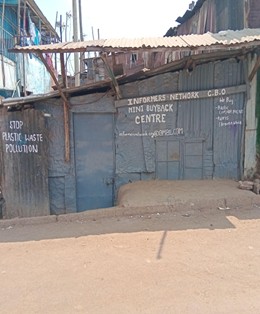
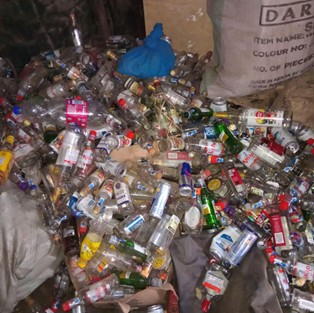
Image showing the buy-back centre and a collection of glass bottles awaiting upcycling. Photos by Jane
Clean-ups and tree planting: SSIM organizes regular clean-ups in Mathare and tree planting in Mathare Park. These activities are particularly focused on engaging men, who often bottle up their mental struggles. Working side by side, men open up about personal issues in ways that feel natural and non-stigmatized.
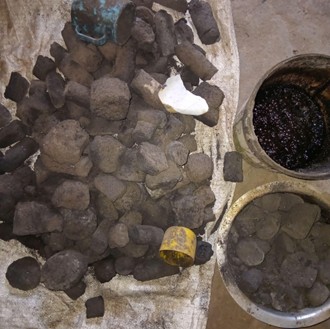
Briquette production for climate and calm: With funds from Muungano wa Wanavijiji, the group is setting up a briquette production unit, an eco-friendly alternative to charcoal and firewood. While the project addresses deforestation and air quality, it also provides steady work, which research shows is essential in reducing mental health risks associated with joblessness.
Community kitchen to fight malnutrition and anxiety: Every Sunday, SSIM feeds at least 250 children through a community kitchen supported by their urban farm and personal contributions. For many parents, this eases the crushing anxiety of food insecurity, while children gain not just nutrition but also a sense of belonging.
Supporting mental health directly
Perhaps the clearest expression of SSIM’s mental health focus lies in their structured support programs. These include:
Support groups: SSIM has created three separate support groups, each with ten members. The first caters for young mothers, who often face postpartum depression and the stress of raising children in precarious conditions. The second caters for youth, tackling issues such as unemployment, drug abuse, and the pressure of growing up in an environment with few opportunities. The thirds caters for the elderly, who deal with isolation, grief, and the trauma of watching their community repeatedly displaced.
These groups act as safe spaces for members to talk openly, support each other, and even save money collectively linking financial stability to mental well-being.
SSIM runs mentorship sessions under a program dubbed JIJUE, for teenagers, focusing on mental health awareness, peacebuilding, leadership, and Sexual and Reproductive Health and Rights (SRHR). The program empowers young people to express themselves, resist harmful cycles of violence, and protect themselves against gender-based violence. For many, this early exposure to mental health awareness prevents long-term struggles from going unaddressed.
Through training and initiatives like Chakula Mtaani, the group nurtures new leaders who can guide their peers and stand as examples of resilience. Building leaders is not just about skills it is about restoring confidence and self-worth.
Looking ahead
SSIM’s vision for the future remains tied to healing minds while building resilience against climate shocks. They plan to expand their briquette production to create more jobs and reduce environmental degradation. More importantly, they hope to establish a community park on riparian land, a dedicated safe space where support groups can meet, children can play, and residents can find peace away from the daily pressures of slum life.
A movement of healing
The story of SSIM is not just about climate action, recycling, or urban farming. At its core, it is about mental health, how trauma, if left unspoken, can break communities, and how collective healing can rebuild them.
By feeding children, planting trees, crafting from waste, or simply sitting together in support groups, the members of SSIM remind Mathare that resilience begins inside the mind. In a place where loss has become too familiar, they are proving that recovery is possible not just for homes, but for hearts.
For updates, SSIM can be found on Facebook at Swift Slums Integrators Mathare and on Instagram under SSIM Foundation.
About the writer
Jane is among 90 youth from informal settlements in Mukuru, Mathare and Kahawa Soweto trained by Basic Needs Basic Rights Kenya, Shack Dwellers International Kenya (SDI Kenya) and Tabasamu Cafe on mental health and climate change, and are now working to build community resilience in their respective localities.