

Madam Mercy Ruguru, a teacher at Mataarba JS in Isiolo County, guiding a learner on tree watering. The school is in a very arid region and therefore as a solution, the school has a tree planting program for teachers and learners. She has been a teacher in the school for just over one year specializing in Kiswahili and Social Studies. Mercy is among 106 JS teachers from 51 schools from across four sub counties – Merti, Cherab, Oldonyiro and Sericho – in Isiolo County, who participated in a capacity building training to equip them with knowledge and skills in strengthening personal resilience and health for in-school adolescents. This intervention is a collaboration by Basic Needs Basic Rights Kenya, Ministry of Education and Teachers Service Commission, supported by Zizi Afrique Foundation and Echidna Giving in 11 Counties in Kenya.
Mercy shares her perspective on the program:
Why I chose to be a teacher
I have been a teacher in Isiolo County for about a year now. Whereas my area of specialization is Kiswahili and Social Studies, I handle other subjects as well due to a teacher shortage in our school.
Before I got into teaching, I worked in the non-profit sector, in programs geared towards increasing enrolment of children in schools, particularly children who had dropped out for one reason or the other. This work was in Isiolo County, and it is this prior experience working in the county, that made it possible for me to be posted as a teacher in this school.
I was driven to get into teaching because I am passionate about playing an active role in moulding children as they go through the different stages of life. It gives me great fulfilment playing a role in helping children to thrive.
Life skills are essential in life
I strongly believe that life skills are what enable people to keep going. A person may have professional skills, but without life skills, the professional skills may not be of use. I, myself, have benefitted from the resilience skills learnt through the Youth First program.
Case in point, this school is in a very arid region of the country. To stay here, you need to have very strong coping mechanisms. I feel the YFK program helped me add onto these skills. I learnt to see positives that I never saw before.
Coming from an urban area, I was used to the fast-paced lifestyle and where amenities were very accessible. Here however, basic things such as tap water, vegetables, fruits and even yoghurt are not readily available here. To me, as opposed to planning how to seek for post transfers, similar to what other teachers often do in this situation, I see this as a positive. It is an opportunity to actually save my income, as I have limited opportunities for impulse spending.
I also apply problem solving, a core skill in the YFK program, in my personal life. For instance, because of the difficulty in accessing vegetables, I buy vegetables like kales in bulk, I sun dry them and crush them into powder, and this increases their shelf life. I am therefore able to add this much needed nutrition in my meals.
I have also gotten a new appreciation to being content. This comes from this community members who in spite of having so little, they seem very content.
Learners are greatly benefiting from life skills
As for my learners, I am noting very significant changes. These learners initially had very limited goals because their aspirations were limited to their level of exposure. All have been born here, grown up here and majority have never left this place. When we began exploring the session on life goals, most wanted to be teachers, doctors, police officers because these are the only professionals they interact with here. We have however managed to help them think beyond this setting and aspire for more.
These learners have also learnt how to express themselves better and even resolve conflicts amongst themselves. Before, we had many cases of learners getting into physical confrontations with each other when they had a disagreement. Now however, they are talking through their issues and even reporting to us teachers to mediate.
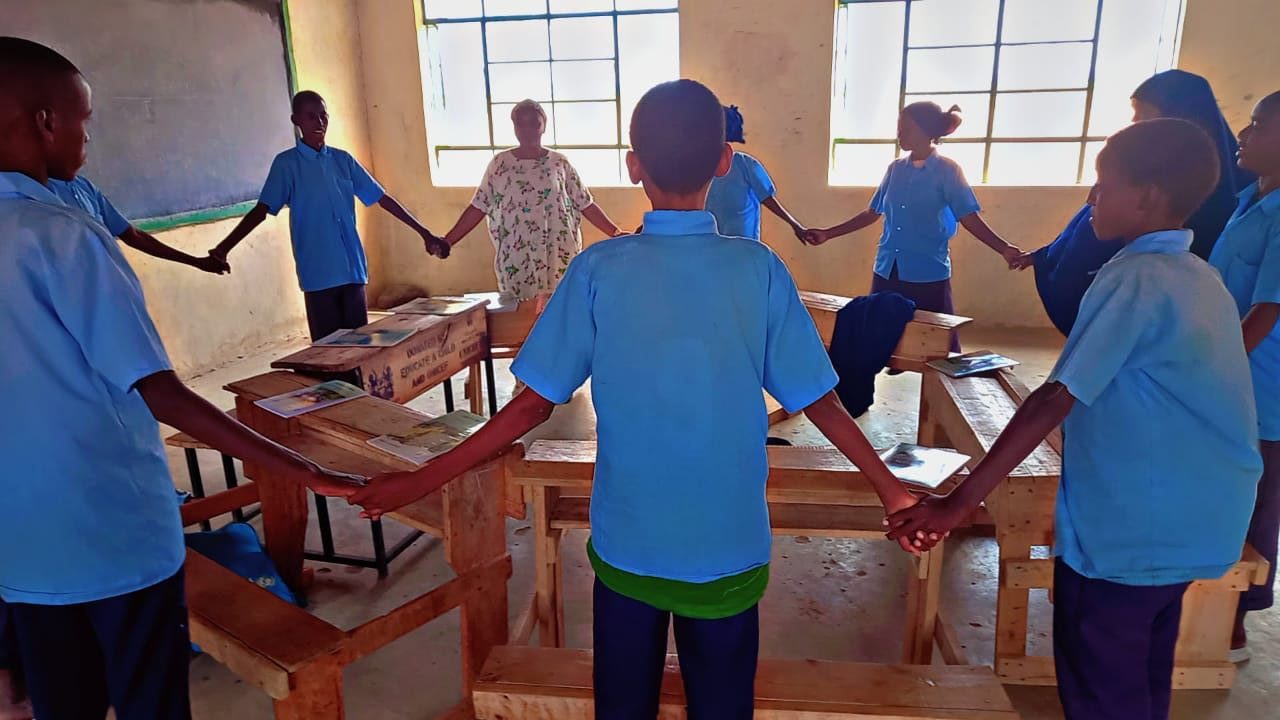
There are instances where our sessions trigger very open conversations that these learners do not have with their parents. In fact, parents and the school management get surprised when we bring some of these to their attention. For instance, these are adolescents who are experiencing various bodily changes, and no one is paying attention. These girls have gotten to a stage where they need sanitary towels and bras, and they don’t know how to bring this to the attention of their parents because this is a highly traditional society. Through the YFK sessions, we are able to trigger these conversations and work towards solutions.
There is need to grow the program further
I am noting significant interest from other teachers in my school who are impressed with the positives they are seeing in learners, and they often come to shadow some of our resilience sessions to see how the program is run as well as to learn. They very much want to be a part of this program.
It would be great if the program considered training more teachers and the school management so that these skills are with multiple people in the school, so that in the event trained teachers are transferred, which is a common thing, it does not affect continuity of the program.
As for the learners, it would also be great if this program helped us expose them to life outside of Cherab. If we could be supported with things like data for internet access, to enable us show them videos and other visuals from outside, thus enabling them to see the vast world out there, this would help broaden their mindsets.
We also need more support for parental engagement to sustain the positive changes in learners. It’s always disheartening that we have capacity built these learners with skills such as conflict resolution and respect, but when they get home, their parents undo these positives. We have instances where our learners complain of their parents needlessly shouting at them when the better approach which they have been taught is having an open and respectful conversation to resolve disagreements.
All in all, this is a great program, and I feel privileged to be a part of it.